


African Fat-Tailed Gecko
Hemitheconyx caudicinctus
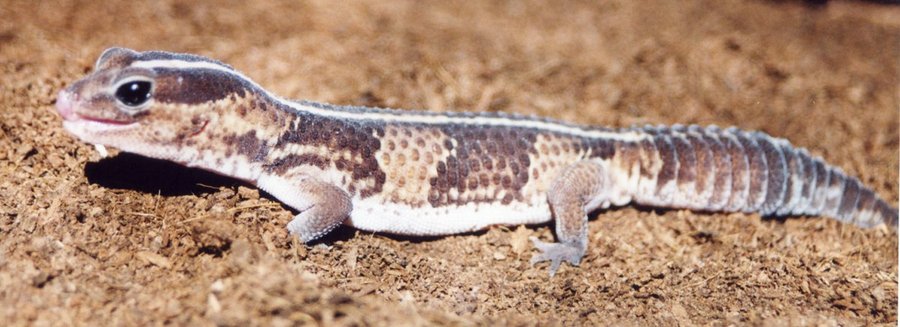
Lizard
Key numbers
The figures below are a working snapshot of what a typical African fat-tailed gecko needs, rather than a guarantee that every individual animal will fit them exactly. The rest of this guide explains the reasoning behind each number, so you can adjust sensibly when your own gecko or your own house behaves a little differently.
- Adult size: Adults commonly reach about 8 to 10 inches, including the tail.
- Lifespan: With consistent care, they often live 15 to 20 years.
- Adult enclosure: An enclosure about 36 inches long by 18 inches deep by 18 inches tall is a practical minimum for one adult.
- Start size: A juvenile can begin in a smaller secure enclosure as long as the warm hide and humid hide are right, then move toward the 36x18 as it grows.
- Housing: Keeping one gecko per enclosure is the safest default.
- Warm hide surface: The surface the gecko sits on in the warm hide should read about 90 to 93 F (roughly 32 to 34 C).
- Cool side: The cool side should sit around 72 to 77 F.
- Night: Nighttime temperatures in the low-to-mid 70s are usually fine.
- Humidity: Keep humidity moderate by day with a rise at night, and keep a humid hide available at all times; many keepers land on ambient readings of around 50 to 70 percent, depending on the season.
- Diet: Offer varied insects that have been fed a decent diet before offering (gut-loaded), with no prey item wider than the space between the gecko’s eyes.
Do’s and don’ts
This list is the short version of the husbandry covered in detail further down the page. If a line here and a paragraph later on ever seem to pull in different directions, trust the longer explanation, because it carries the context that a one-line rule cannot.
Do
- Give an adult about 36x18 of floor space with a warm hide, a cool hide, and a humid hide that actually differ.
- Measure the warm-hide floor with an infrared gun, not a sticker on the glass.
- Keep more ambient moisture than you would for a leopard gecko, without turning the box into stagnant mud.
- Offer varied insects fed a decent diet before offering (gut-loaded) on a dish or tile, dusted on a calcium schedule matched to your UVB choice.
- Learn that individual’s ordinary patterns so a shrinking tail, stuck toe shed, or a gecko that stops coming out at night stands out.
- See a veterinarian who regularly treats reptiles when appetite, stool, shed quality, or body condition leaves that baseline (local herp groups and exotic-vet directories help you find one before you need them).
- If you find a loose pet gecko near Cartersville, send us a picture and we can help identify it and talk through next steps.
- Buy captive-bred when you can. Wild-caught fat-tails still show up in trade and arrive with more parasite and dehydration risk.
Don’t
- Do not copy a bone-dry leopard gecko setup and call it close enough.
- Do not house two males together, and do not assume a pair is automatic enrichment.
- Do not use a hot rock or an unregulated heat mat as the main heat.
- Do not use calcium sand or feed insects coated in loose dusty bedding.
- Do not handle for a couple of days after a large meal, or while the gecko is in heavy shed.
- Do not read a fat tail as proof the animal is healthy without checking the rest of the body and appetite.
- Do not release a pet gecko into Georgia woods.
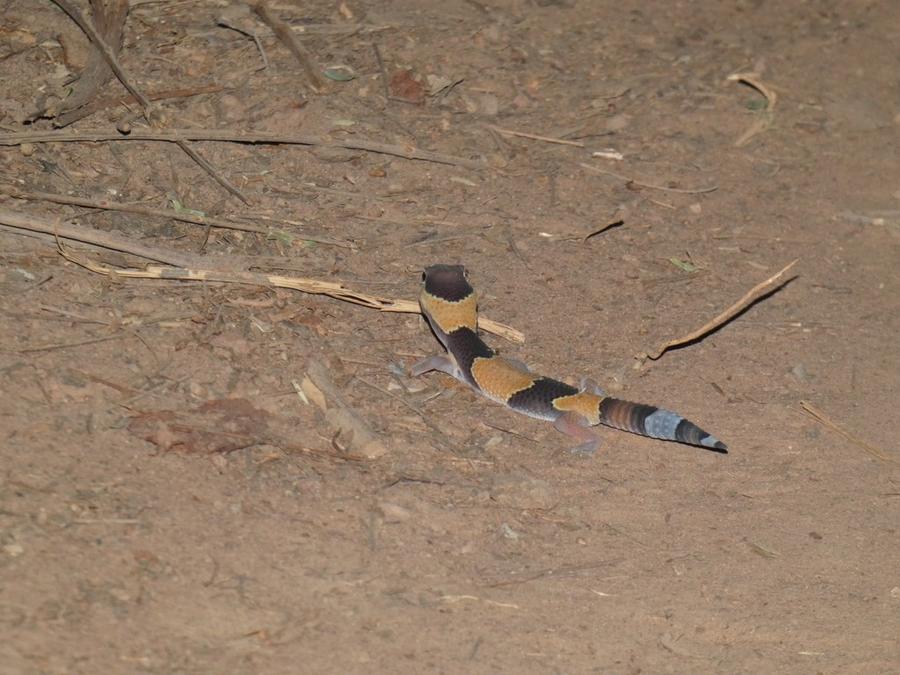
African fat-tailed gecko alternate angle showing thick banded tail — not a leopard gecko. Stock photo (iNaturalist CC-BY-NC); not publish-ready until Josh confirms license.
A bit of background
The African fat-tailed gecko, Hemitheconyx caudicinctus, is a ground-dwelling eyelid gecko from West Africa, where its range runs from Senegal across the Sahel and savanna belt toward northern Cameroon. In the wild these geckos are active mainly at night and spend their days in burrows, rock crevices, and leaf litter, and they store energy reserves in a thick, segmented tail. They look enough like leopard geckos that pet stores often sell them as a “humid leo,” but that shorthand is responsible for a great many stuck sheds and thin tails. Fat-tails want more moisture in their microclimate, more secure cover, and often a quieter enclosure than the dry, brightly lit tub that suits a leopard gecko.
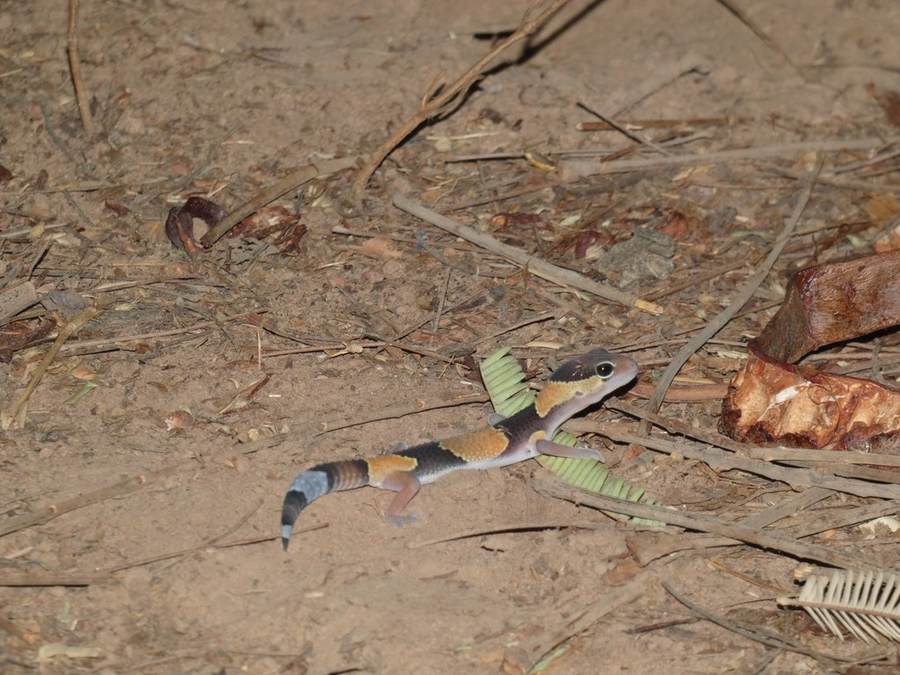
African fat-tailed gecko on sandy ground — banded pattern and fat tail for species ID, not a leopard gecko. Stock photo (iNaturalist CC-BY-NC); not publish-ready until Josh confirms license.
Captive-bred animals are widely available and make a far better start than imports. Adults commonly reach about 8 to 10 inches in total length, and a lifespan of 15 to 20 years is common, so this is a long commitment. This guide covers general husbandry for Hemitheconyx caudicinctus; individual animals vary, and nothing here replaces an examination by a veterinarian who regularly sees reptiles. It is also worth knowing that fat-tails are not Georgia natives, so a banded gecko you find on a Cartersville property is not this species.
Whether they are a good fit
An African fat-tailed gecko is a long-lived, nocturnal insectivore that needs a genuine humidity gradient and a keeper who is willing to gut-load insects for many years. Once their hides and moisture levels are right, they are often calmer than their online reputation suggests. They are, however, a poor fit for anyone who wants a dry desert bowl with a single hide, for a household that plans to keep two males in one enclosure, or for anyone expecting a crested-gecko-style complete powdered diet, because this species eats insects.
Enclosure and space
Floor space matters more than height for this species. A practical minimum for a single adult is about 36 inches long, 18 inches deep, and 18 inches tall, because that footprint lets you place the warm, cool, and humid hides with real distance between them while still leaving room for leaf litter and low climbing structure. Fat-tails are terrestrial, but they will happily use low cork and rock. A juvenile can start in a smaller enclosure as long as all three hides are present and the temperatures are correct, but you should move it up as it grows rather than leaving an adult in a small critter-keeper indefinitely.
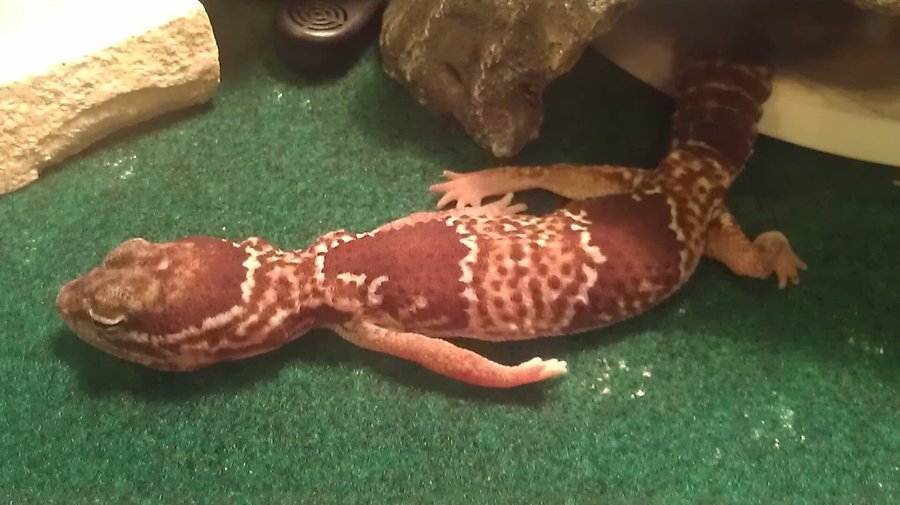
African fat-tailed gecko resting near a hide on enclosure carpet — banded fat tail, not leopard gecko spots. Stock photo.
One gecko per enclosure is the safest default. Males will fight, and even a male-female pair can breed more often than is healthy and stress each other in the process. Housing fat-tails together is an advanced choice that should only be made with a ready plan to separate them, and it is not the recommendation for a first-time keeper.
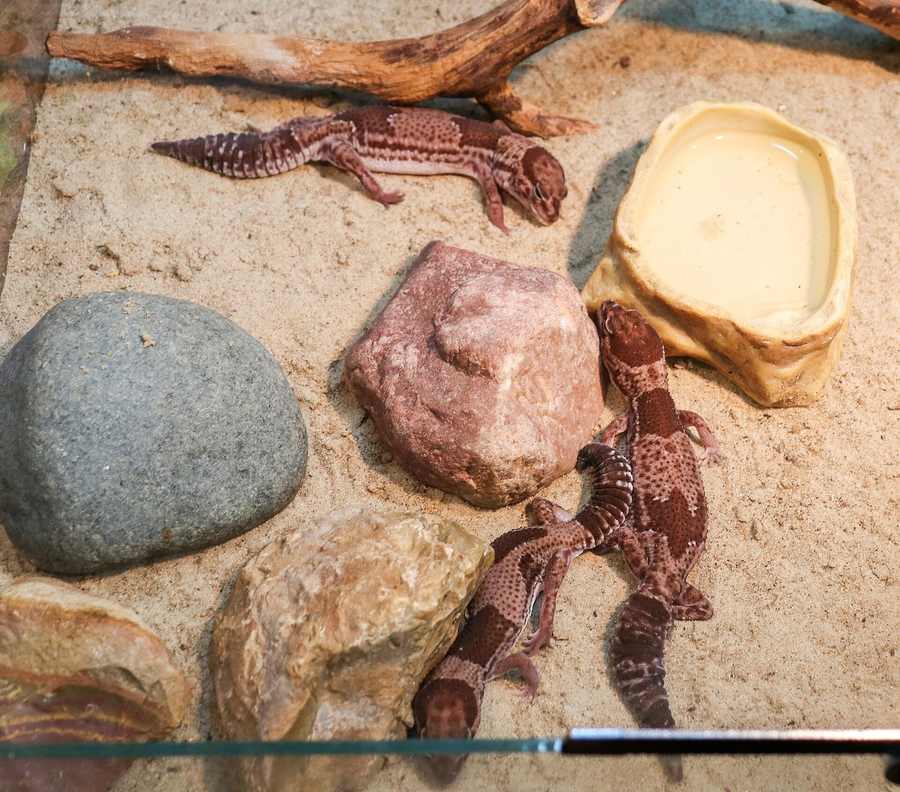
African fat-tailed geckos in a furnished terrarium (zoo exhibit; keep AFTs solitary at home). Stock photo.
A warm hide, a cool hide, a humid hide, leaf litter, and a shallow water dish do far more for the animal than open decoration does, and the gecko should always be able to disappear from view completely. Many modern keepers run this species with overhead heat warming a hide placed beneath it, which tends to work better than a bare under-tank pad on its own, although a thermostat-controlled under-tank heater can still contribute as long as you verify the surface temperature.
Temperature and the gradient
A fat-tail’s digestion depends on having a warm hide it can press its belly into, so measure the floor of that hide with an infrared temperature gun rather than trusting an air reading. For an adult in the warmer season, a warm-hide surface of around 90 to 93 F is a good working target, while the cool side of the same enclosure typically sits around 72 to 77 F. Overnight temperatures in the low-to-mid 70s are usually fine. Deliberate seasonal cooling is something to reserve for healthy, established adults under a clear plan, and never for a thin, newly imported animal.
Every heat source is safest when it runs on a thermostat. A common modern approach is a halogen bulb or deep heat projector mounted overhead and aimed so that the warm hide reaches its target temperature. Unregulated heat mats and hot rocks can cause serious burns, and colored night bulbs are simply unnecessary.
Light, UVB, and the daily cycle
Although these geckos are mostly nocturnal, they still need a clear distinction between day and night. A simple cycle of 12 hours of low room light or a gentle LED followed by 12 hours of darkness is enough to set their internal clock.
Many keepers provide low-level UVB, meaning gentle daytime exposure in the Ferguson Zone 1 range with deep shade always available, and it can support normal calcium metabolism when the gecko is free to choose how much exposure it gets. UVB is not a substitute for a correctly heated warm hide, however. If you decide to skip UVB, your supplement dusting schedule must include vitamin D3, used carefully; if you do use UVB, avoid also stacking heavy D3 on every meal. Remember too that a heat lamp provides heat only, not UVB.
Humidity, water, and shedding
Humidity is the main point where fat-tail care departs from leopard gecko habits. Fat-tails need a humid hide available at all times, along with ambient moisture that rises at night. Many successful setups run at around 50 to 70 percent ambient humidity depending on the season, with the inside of the humid hide kept wetter still. The substrate surface is allowed to dry out, but the enclosure’s microclimates should never all be desert-dry.
The balance matters in both directions. Substrate that stays stagnant and wet over long periods leads to respiratory and skin problems, while chronically dry air combined with a “humid” hide that has dried out is how toe constriction from stuck shed begins. A healthy shed should come away cleanly, including from the toes and the tip of the tail, and a shallow water dish should be available at all times.
Diet
African fat-tailed geckos are insectivores, and they do best on a varied menu of gut-loaded crickets, dubia or discoid roach nymphs, black soldier fly larvae, silkworms, and similar feeders. Mealworms can be part of the rotation, but they should not be the only insect offered. Each prey item should be no wider than the space between the gecko’s eyes, and it helps to feed on a dish, a slate, or a clear patch of floor so the gecko does not swallow substrate along with its meal.
Juveniles often eat daily or every other day, while adults commonly do well on a meal every three to five days, depending on their condition and the season. When UVB is in place, dust most meals with plain calcium without D3; when UVB is absent, use calcium with D3 on a careful schedule instead, and in either case add a reptile multivitamin a couple of times a month. A thick, segmented tail is a reserve, not a license to overfeed until the gecko becomes sausage-shaped. Conversely, a tail that has thinned to a pencil on an animal whose body is still thick calls for a conversation with a veterinarian rather than simply more waxworms.
Substrate
A compact soil, sand, and clay style mix laid several inches deep, often around 3 to 4 inches or more for adults, lets fat-tails dig and holds a moisture gradient well, and a layer of leaf litter on top helps further. Paper towel is the correct choice during quarantine and for thin or newly imported animals. Pure sand, calcium sand, dusty aspen, and cedar are all poor choices. Whatever you use, support heavy cork and rock from below so nothing can shift onto a digging gecko.
Handling and daily life
Many fat-tails tolerate short, calm handling sessions once they know the routine, provided you support the whole body. Never pull an animal out of a tight humid hide, and never grab it by the tail, because fat-tails can drop their tails under stress and a regenerated tail never looks quite the same. Hold off on handling after large meals and during difficult sheds. You will also learn far more about your gecko by watching it at night under dim room light than by handling it every day while it would rather be asleep.
Body language and behavior
Because a fat-tail’s round face and chubby tail look almost cartoonish, people tend to invent stories about what the animal is thinking. In reality, a gecko that stays hidden all day is usually behaving quite normally, and a gecko that gapes or vocalizes when it is grabbed is asking for space rather than “talking back.” Reading human emotions into a reptile in this way is exactly how keepers end up missing a shrinking tail or bands of stuck shed on the toes.
Signals that are usually ordinary
Prowling the enclosure at night, tongue-flicking, burrowing into the humid hide before a shed, and settling into the warm hide after the lights go out are all ordinary fat-tail behaviors and no cause for concern.
What to watch for
- Stuck shed on the toes, tail tip, or eye edges that keeps repeating usually points to a humidity or hydration problem.
- A tail that keeps thinning despite regular feeding is a sign the gecko is losing condition and needs a closer look.
- Open-mouth breathing, bubbles, or lethargy can signal a respiratory problem.
- A soft jaw, tremors, or swollen limbs should be treated as metabolic bone disease (soft, poorly mineralized bone from insufficient UVB and/or calcium) until proven otherwise.
- Foul or repeatedly watery stool, or suspected parasites in a new import, is a reason for a fecal exam.
- Signs of impaction can follow oversized prey, cool temperatures, and swallowed substrate.
If you notice any of these patterns, check your husbandry first, and then see a reptile veterinarian if the animal does not return to its own normal baseline.
Problems that show up often
The problems we see most often are predictable. Stuck shed usually comes from dry setups copied from leopard gecko care, while parasites and dehydration are common in wild-caught imports. Metabolic bone disease tends to follow guesswork dusting combined with no plan for UVB, obesity follows diets heavy in waxworms, and bite wounds follow cohabitation. Another frequent issue is a warm hide that looks fine on a wall thermometer while the hide floor itself is too cold for the gecko to digest its food properly.
Bringing a new animal home
Quarantine a new gecko on paper towel for about 30 to 90 days and arrange a fecal check, especially if the animal’s origin is unclear. Before moving it into a naturalistic display, confirm that the warm hide is at the right temperature and that the humid hide is working properly. Leave the gecko alone long enough for it to eat and complete one shed before you start regular handling. Those first weeks are also the ideal time to learn this individual’s ordinary night-time activity and what a healthy tail looks like on this particular animal.
Tail signals and feeding discipline
The fat tail works as a fuel tank. A rounded, segmented tail on a gecko that still hunts eagerly and sheds cleanly is a good sign, whereas a tail that collapses while the gecko refuses food calls for a priority health check. Resist the urge to “fix” a thinning tail with endless waxworms; address heat, parasites, and dietary variety first.
Because these geckos are so secretive, it pays to weigh them on a gram scale during quarantine and periodically afterward, since recorded numbers catch slow declines that quick night-time glances easily miss.
Recommended gear
Some of the links below go to Amazon, and if you buy through them we may earn a small commission. This does not change the price you pay.
When you are budgeting, remember that a 36x18 footprint, a warm hide that reaches the low 90s, a properly functioning humid hide, and a temperature gun all matter far more than decoration.
- New Age Pet ECOFLEX 36-inch Mojave Reptile Lounge (exterior about 36 x 18 x 18 inches) for a single adult
- Etekcity Lasergrip 774 infrared temperature gun to measure the surface the animal actually sits on
- ThermoPro probe thermometer and hygrometer to track air temperature and humidity
- REPTIZOO dimming thermostat if heat is a bulb; use an on/off stat for a mat
- Zoo Med Forest Floor cypress or a soil-sand-clay mix kept from going swampy
- Snug opaque hides for warm, cool, and humid retreats
- Zoo Med Reptile Calcium without Vitamin D3 when low-level UVB is in place
- Calcium with D3 if you skip UVB