


Sulcata Tortoise
Centrochelys sulcata
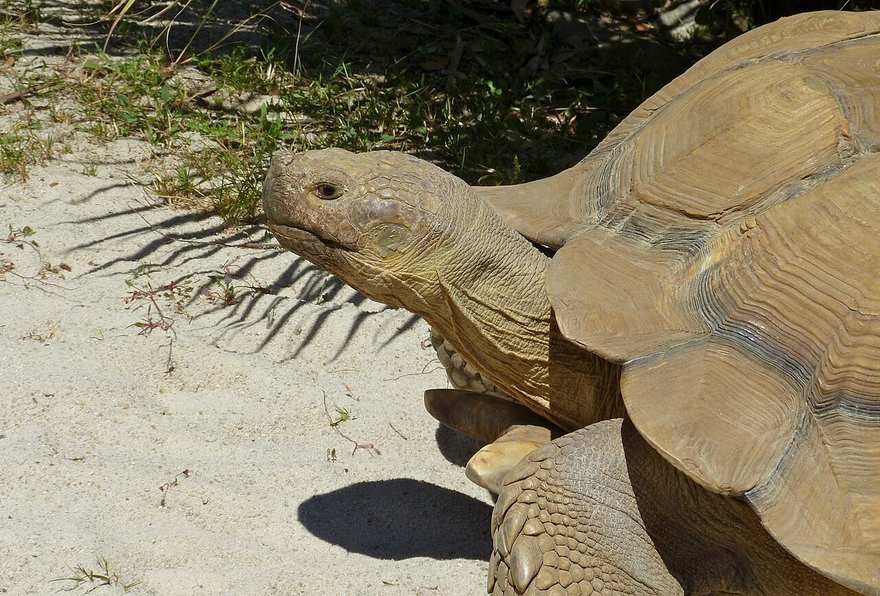
Tortoise
Key numbers
These figures are a working snapshot for a typical sulcata tortoise, not a guarantee for every animal. The rest of the guide is there to explain why they look this way — especially the adult size.
- Adult size: commonly about 24 to 30 inches in shell length and about 80 to 110 pounds; exceptional animals can exceed that weight. This is not a Russian tortoise that stayed in the store photo
- Lifespan: often 70 years or more; treat ownership as multi-generational
- Adult enclosure: outdoor secure pen space on the order of 100 to 300+ square feet for one adult is the practical conversation; indoor-only adulthood is unrealistic for most households
- Start size: hatchlings need a large indoor table or pen with heat, UVB, and a humid microclimate — then rapid upgrades as they grow
- Housing: one tortoise per enclosure is the predictable arrangement; males fight
- Basking surface: about 95 to 105 F on the surface the tortoise sits on
- Warm ambient / cool end: warm-side air often in the 80s; cool retreat into the 70s; do not leave adults cold and wet
- Night / winter: heated dry shelter required when nights drop around Cartersville — sulcatas do not hibernate like temperate tortoises
- Humidity: juveniles need a humid hide and careful hydration to limit pyramiding; adults are dry-country grazers with access to shade and a dry burrow or house
- Diet: high-fiber grasses and grass hays as the staple; weeds and safe broadleaf plants; almost no fruit; no animal protein
Do’s and don’ts
The short version of the husbandry below. If a line here and a paragraph later seem to pull in different directions, trust the longer explanation.
Do
- Plan the adult outdoor pen, heated shelter, and fencing depth before you buy a hatchling
- Stress the adult size to everyone in the household: suitcase-sized shell, decades of fencing, heated shelter, hay, and vet care, and the strength to bulldoze fencing
- Give juveniles a long high-output fluorescent UVB tube (T5 HO), a hot basking surface, and a humid retreat; grow them on fiber, not grocery soft greens alone
- Feed grasses and grass hay as the core diet for life
- Learn that individual’s ordinary appetite, stool, and shell growth so pyramiding and respiratory signs stand out early
- See a veterinarian who regularly treats reptiles when appetite, stool, shell, or breathing leaves that baseline (local herp groups and exotic-vet directories help you find one before you need them)
- Send a picture if you find a tortoise on a property near Cartersville and want an ID. If you want it moved, we relocate within about an hour of Cartersville at no charge
- Check local rules; large tortoises attract HOA, fencing, and sometimes permit questions
Don’t
- Do not buy a sulcata because the hatchling fits in a shoe box. Adults are giant tortoises
- Do not house adults long-term in indoor turtle tables meant for Russians
- Do not feed dog food, cat food, fruit bowls, or high-protein chow
- Do not force rapid growth with rich food. Pyramiding (raised, peaked scutes on new shell growth) and soft bone follow that picture
- Do not leave a sulcata outside through a North Georgia freeze without a heated shelter plan
- Do not release a pet sulcata into Georgia woods, and do not assume a large tortoise on a property is a native gopher tortoise without an ID
- Do not read ramming, digging, or sitting in a lap as a human mood
A bit of background
The sulcata tortoise, Centrochelys sulcata (also called the African spurred tortoise; older labels may say Geochelone sulcata), is a grazing giant from the Sahel region of Africa. In the field they dig burrows, walk long distances, and eat tough grasses. In the U.S. pet trade they are common because hatchlings are inexpensive and captively bred in large numbers. That economy hides the adult: a tortoise the size of a coffee table with the lifespan of a person.
Adult male sulcata tortoise (Centrochelys sulcata / African spurred tortoise) outdoors — spurred thighs and high-domed shell. Stock photo (Wikimedia Commons, CC BY-SA 2.0, Bernard DUPONT).
They are the largest mainland tortoise species and among the most frequently surrendered reptiles when keepers hit the growth wall. Rescues fill with sulcatas that outgrew apartments, decks, and marriages. This guide exists partly to say that out loud before the impulse buy.
Adults commonly reach about 24 to 30 inches and 80 to 110 pounds, with larger individuals on record. Lifespan is often measured in many decades. This guide is general husbandry for Centrochelys sulcata. Individual animals vary, and nothing here replaces an exam by a veterinarian who regularly sees reptiles.
Around Cartersville, outdoor keeping is seasonal and shelter-dependent. A native gopher tortoise on land here is a different species and a different legal picture. Send a photo if you want an ID before you decide what you are looking at.
Whether they are a good fit
A sulcata is a good fit only if you can provide adult outdoor space, a heated night/winter shelter, fencing that survives bulldozing and digging, and a decades-long care plan. They are a poor fit for apartments, for anyone who wants a small tortoise forever, and for households that will feed fruit and protein because “he likes it.” If your honest adult plan is “we will figure it out later,” do not buy the hatchling.
Enclosure and space
Hatchlings and small juveniles can live indoors in a large tortoise table or enclosed pen with a hot basking end, UVB, a cool end, and a humid hide. That indoor phase is temporary. As the shell passes roughly 8 to 10 inches, outdoor secure space becomes the real home for most keepers.
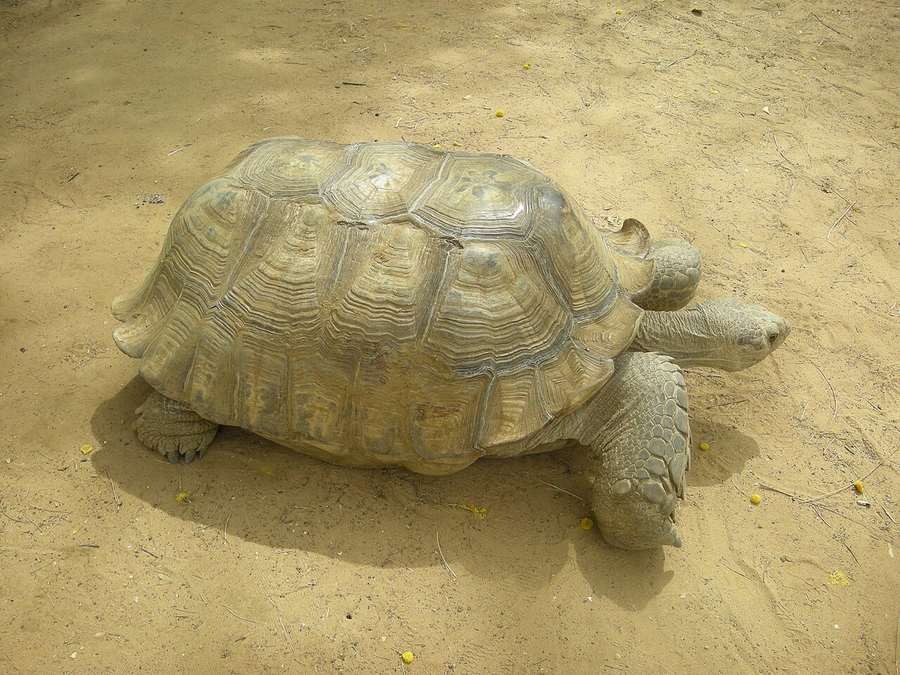
Sulcata tortoise in an outdoor sandy/grass pen — large terrestrial grazer that needs real outdoor space. Stock photo (Wikimedia Commons, public domain, Ji-Elle / Bandia).
Adult pens are measured in large outdoor footprints — think on the order of 100 square feet as a hard minimum conversation and 200 to 300+ square feet as a more honest target for one adult — with fencing sunk deep enough to stop digging out and tall or capped enough to stop climbing or tipping. A dry, insulated shelter with thermostatically controlled heat is required when nights drop. Predator-proofing matters for juveniles; adult mass solves some predation problems and creates new fencing problems.
One tortoise per enclosure avoids male combat and resource fights. Multiple adults require serious acreage and experience.
Temperature and the gradient
Indoors, measure a basking surface around 95 to 105 F with an infrared gun, with a cooler retreat in the 70s. Outdoors, natural sun does the basking work when shade and a burrow or house are available. Sulcatas do not hibernate like some temperate tortoises. Sustained cold is dangerous. Around Cartersville, that means a heated shelter plan for cool nights and winter, not hope.
Thermostats on any artificial heat are mandatory. Hot rocks burn. Colored night bulbs are unnecessary.
Light, UVB, and the daily cycle
Sulcatas are diurnal grazers. Indoors they need a timer-driven day length and a linear T5 HO UVB tube in a desert-strength class over the basking zone, replaced on schedule. Outdoor direct sun is excellent when the pen is secure and shade is available. Window glass is not UVB. A heat lamp is still heat, not UVB.
Humidity, water, and shell growth
Juveniles hatch into a wetter seasonal picture in nature and dehydrate into pyramided shells when kept bone-dry on rich food. A humid hide, regular shallow soaks as needed, and a high-fiber diet are the juvenile toolkit. Adults are dry-country animals with access to shade, a dry burrow or house, and clean water. Chronically wet, filthy indoor boxes cause respiratory disease at every age.
A healthy shell grows with relatively smooth new scutes when diet, UVB, hydration, and temperature are in range. Dramatic pyramiding is a husbandry conversation, not a morph.
Diet
The staple is grass and grass hay: Bermuda, orchard, timothy, and similar, plus safe weeds and broadleaf plants (dandelion, plantain, hibiscus leaves when unsprayed, and the like). Variety across the week matters. Fruit is an occasional mistake, not a staple. Animal protein, dog food, cat food, and processed treats do not belong here. Soft supermarket greens alone grow fast, ugly shells.
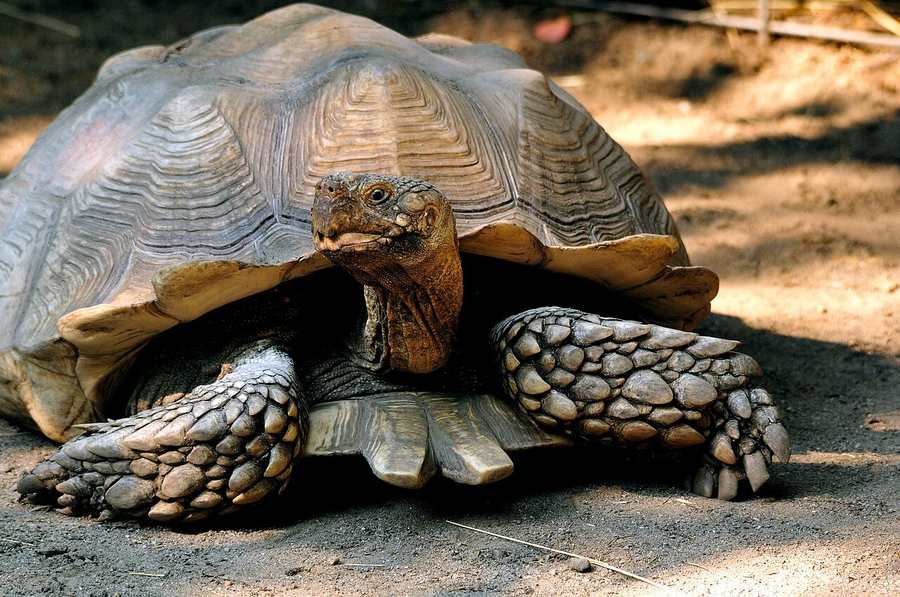
Sulcata tortoise grazing — grass and grass hay are the staple diet, not fruit or animal protein. Stock photo (Wikimedia Commons, CC BY 2.0, Gregory Moine).
Body condition should show a strong tortoise that can walk and dig, not a pyramid of soft fat. Cuttlebone free-choice and light calcium support for growing indoor animals help; supplements do not replace UVB or fiber.
Substrate
Indoors, a diggable soil-based mix several inches deep with a dry surface and a humid retreat works for juveniles. Outdoors, natural soil with grass, drainage, and a designated dig zone is ideal. Cedar and aromatic pine are not bedding. Support shelters so diggers cannot collapse them.
Handling and daily life
Support small tortoises under the plastron (the flat underside of the shell). Adults are not lap animals; they are walking livestock with a shell. Outdoor grazing time in a secure pen does more for welfare than carrying them around a kitchen. Wash hands after handling any reptile as ordinary hygiene; do not turn that into a scare story.
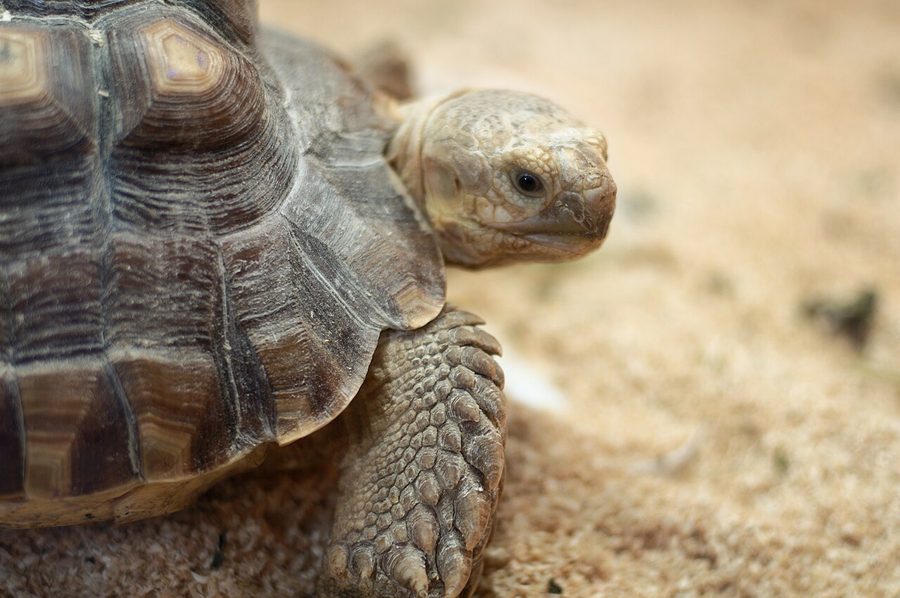
Sulcata tortoise head close-up — thick scales and beak typical of Centrochelys sulcata. Stock photo (Wikimedia Commons, CC0, Derrick Coetzee).
Body language and behavior
Ramming is combat or exploration, not play wrestling for your benefit. Digging is ordinary. A tortoise that sits still while warmed is not “cuddling” in a dog sense. Anthropomorphizing is how keepers miss respiratory bubbles and a soft jaw.
Signals that are usually ordinary
Grazing for hours, digging, basking, and resting in a shelter through midday heat are ordinary.
What to watch for
- Open-mouth breathing, bubbles, or a runny nose.
- Soft jaw, soft shell, or tremors. Metabolic bone disease (soft, poorly mineralized bone from insufficient UVB and/or calcium) until proven otherwise.
- Rapid pyramiding on new growth with a soft, rich diet.
- Refusal of grass hay and weeds, weight loss, or abnormal stool.
- Escape damage to fencing that means the pen is no longer secure.
Any of those patterns is a reason to check the husbandry first, then to see a reptile veterinarian if the animal does not return to its own baseline.
Problems that show up often
Underestimated adult size and surrender to rescues. Pyramiding from dry, rich juvenile growth. Respiratory disease from cold damp shelters. Escapes through shallow fences. Obesity and shell stress from fruit and protein. Confusion with gopher tortoises on Georgia properties — send a photo before you relocate anything.
Bringing a new animal home
Quarantine new animals away from any existing collection for about 30 to 90 days with a fecal check. Confirm heat, UVB, humid hide, and a grass-based diet before the Instagram enclosure build. Those first weeks are also the time to be honest about whether the adult pen plan is real. If it is not, rehome while the animal is still small enough to place easily.
The adult-size conversation, repeated on purpose
A hatchling sulcata fits on a dinner plate. An adult can outweigh a large dog and live longer than many mortgages. Keepers who “did not know” usually mean they did not want to know. Before purchase, walk the actual yard space, price the fencing and heated shelter, and decide who inherits the animal if you move or die. Rescues in the Southeast are saturated with sulcatas from impulse hatchling buys. Do not add to that pile.
Growth rate is not a contest. Fast growth on protein-rich food produces impressive size and ugly, weakened shells. Slow, grassy growth with correct heat and UVB produces a tortoise that can carry its own weight for decades.
Winter and wet weather around Cartersville
Sulcatas are Sahel animals. They handle heat better than prolonged cold wet. In Bartow County and nearby, that usually means a dry insulated house with thermostatic heat whenever nights drop, and a plan for rainy stretches so the tortoise is not sleeping in mud. Outdoor humidity spikes are fine when a dry retreat exists. A soaked doghouse on bare ground is not a retreat.
Recommended gear
Some of these links go to Amazon. If you buy through them, we may earn a small commission. It does not change the price you pay.
Adult fencing, a heated shelter, UVB for indoor phases, and grass hay matter more than a cute hatchling kit.
- A large tortoise table only as a juvenile indoor stage
- Etekcity Lasergrip 774
- ThermoPro probe thermometer and hygrometer
- A dimming thermostat for indoor basking heat
- A desert-strength T5 HO UVB kit for indoor housing; follow the distance chart
- Timothy or orchard grass hay
- Organic topsoil for diggable indoor substrate
- Shallow ceramic water dish