Eastern Coral Snake
Micrurus fulvius
eastern-coral-snake
Snapshot
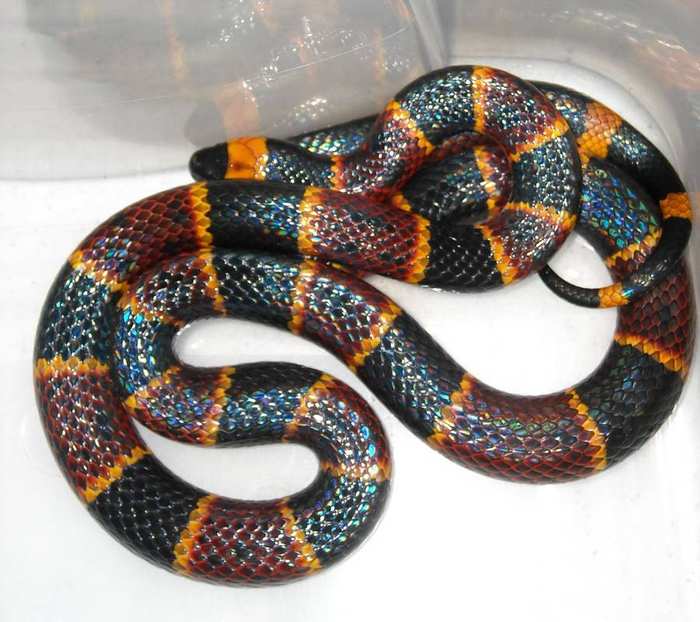
The eastern coral snake is Georgia’s only elapid (cobra relative): a slender, shiny snake with complete red, yellow, and black rings, a black snout, a yellow band behind the eyes, and a black-and-yellow tail. Georgia DNR places it mainly in the Coastal Plain (plus a lower Piedmont Flint River basin population), lists it as rare / Species of Concern, and stresses secretive, fossorial habits. Venomous, with primarily neurotoxic venom. Leave alone. Do not rely on memory rhymes alone — when unsure, give space. No EVE Animal Pictures folder yet; Commons photos below.
Photos
Description and identification
Long, slender body with smooth, polished scales. Females typically longer (capable of nearly 3 feet); males around 2 feet; longest recorded just over 47 inches; most 20–30 inches. Red and black rings generally equal in width, separated by narrower yellow rings; red rings often flecked with black. Head blunt and rounded, barely wider than the neck; snout black with a wide yellow band behind the eyes. Tail banded only in black and yellow. Juveniles patterned like adults, about 8 inches at hatching. Fixed front fangs (not rear-fanged); myths that they can only bite thin webbing are false — do not handle.
Look-alikes
Two harmless Georgia look-alikes:
- *Scarlet kingsnake (Lampropeltis triangulum elapsoides) — red, black, and yellow/white rings; red snout*; light rings separated from red by black (“red touch black”).
- *Scarlet snake (Cemophora coccinea)* — red pointed snout; red blotches outlined in black; smooth white belly (rings do not fully match the coral pattern).
DNR cites the rhyme “red touch yellow, deadly fellow; red touch black, venom lack,” but notes people often reverse it. Best practice: leave any tricolored snake alone if identification is not certain.
Range in Georgia
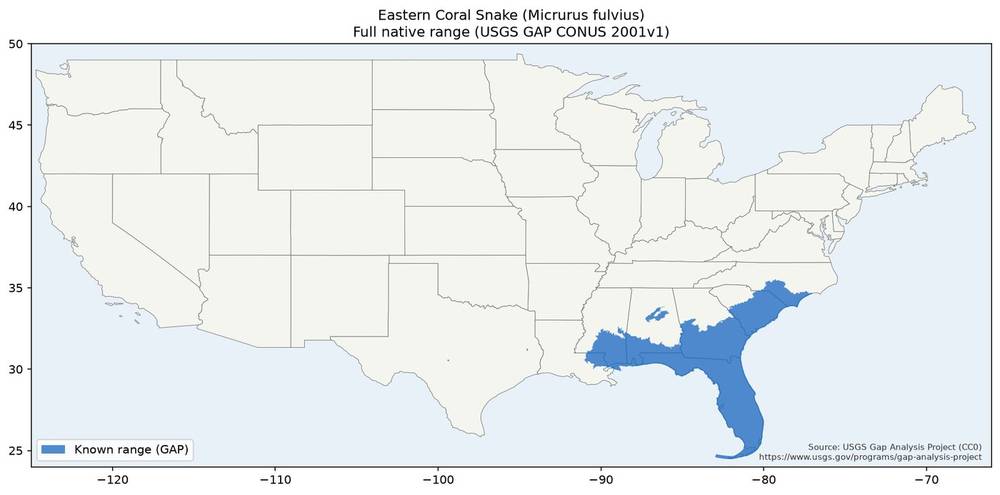
Mainly Coastal Plain; a population occurs in the lower Piedmont along the Flint River basin. Wide gaps in documented range; animals may be absent even where habitat looks suitable. U.S. range: southeastern North Carolina to extreme eastern Louisiana. Brochure: generally distributed and seemingly fairly common in the lower and middle Coastal Plain of southeastern Georgia; status in the Piedmont, upper Coastal Plain, and southwestern Georgia is poorly known. Rare, Georgia Species of Concern.
Full species range map
Habitat preferences
Well-drained sandy soils with open ground: longleaf pine sandhills, pine–saw palmetto flatwoods, live oak and hardwood hammocks on well-drained soils. Absent from extensive wetlands and vast poorly drained pine flatwoods. Shelters in gopher tortoise burrows, stump holes, rotten logs, and other underground refuges. Highly subterranean.
Natural history
Can be surface-active day or night; dawn and dusk are often busy. Spring high activity for males; fall for females. Fossorial — much time in loose soil, leaf litter, or underground. May be inactive in winter in burrows. Courtship/mating late spring. Only venomous snake in the U.S. that lays eggs (typically 3–10), deposited in summer in old stumps or rotting logs; hatchlings disperse in late summer. Captives nearly ten years; wild spans poorly known. Actively pursue other reptiles (smaller snakes, skinks, legless lizards), nosing through litter until prey is grabbed and envenomated. Predators include hawks, shrikes, indigo snakes, racers, coachwhips, and kingsnakes.
Food preferences
Other reptiles — especially smaller snakes, skinks, and legless lizards.
Temperament and encounters
Secretive and not commonly encountered. Potent neurotoxic venom can affect nerve–muscle connections and, in severe cases, progress toward paralysis and respiratory or cardiac failure — another reason never to handle. Most people will never see one; when they do, the correct response is distance and respect, not a rhyme contest.
Conservation and legal notes
Seemingly fairly common where recorded, but needs better documentation elsewhere. Threats: human persecution and loss of well-drained upland habitat to farming and silviculture. O.C.G.A. §27-1-28: illegal to possess or kill many nongame species including non-venomous snakes. O.C.G.A. §27-1-30: illegal to disturb dens or use explosives, chemicals, or other devices to drive wildlife — including venomous snakes — from homes.
If you meet one
Do not touch. Photograph from a distance only if safe, then let it disappear into cover. Scarlet kingsnakes and scarlet snakes deserve the same courtesy. For conflict situations, use qualified professionals. Etowah Valley Exotics and similar Cartersville educators can help neighbors learn the difference without harming harmless look-alikes.
Bite care: stay calm; call 911 or Georgia Poison Center 1-800-222-1222 immediately; hospital; identify by sight only; do not kill the snake; keep patient calm with limb level; no food/drink/meds; no tourniquet, cutting, sucking, or ice.