Eastern Diamond-backed Rattlesnake
Crotalus adamanteus
eastern-diamond-backed-rattlesnake
Snapshot
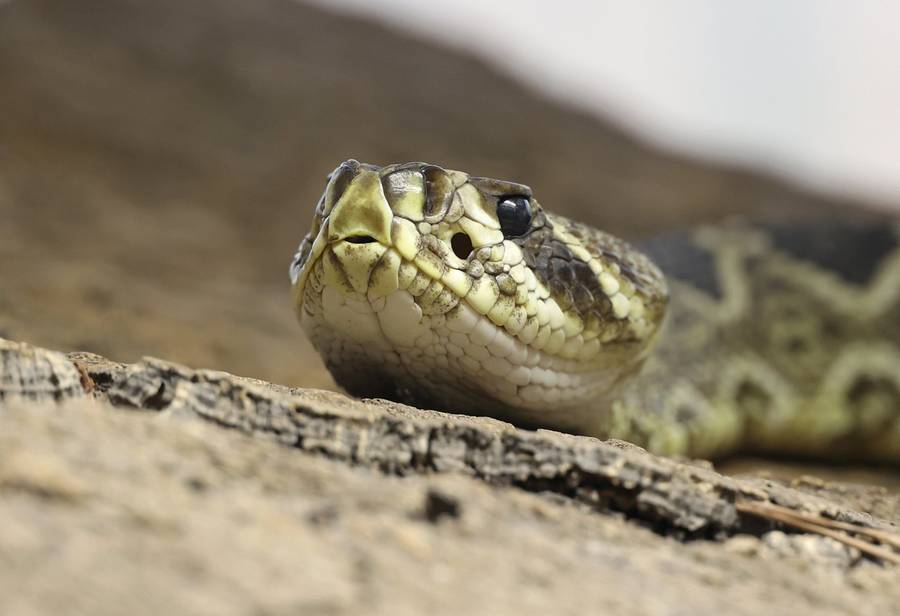
The eastern diamond-backed rattlesnake is North America’s largest venomous snake and the largest of Georgia’s venomous species: a heavy-bodied Coastal Plain pit viper patterned with dark diamonds edged in yellow or cream, a dark eye stripe bordered by yellow, and a loud keratin rattle. Georgia DNR finds it south of the Fall Line and lists it as rare / a Georgia Species of Concern. Venomous. Leave alone. No EVE Animal Pictures folder yet — Commons photos below.
Photos
Description and identification
DNR fact sheet and brochure: large, heavy-bodied pit vipers with keeled scales and an undivided anal plate. Known to reach 78 inches (6.5 feet); unsubstantiated reports over 8 feet; more typically 3–5 feet (brochure: reaching or possibly exceeding 7 feet). Upper body with 24–35 dark brown diamond-like blotches broader than long, fringed by thin yellow to cream borders and linked at their tips. A dark brown or black stripe bordered by yellow hides the eyes. Head wide and blocky, distinctly wider than the neck, with deep heat-sensing pits between eye and nostril. Tail with 3–10 brown and white bands plus a rattle of hollow keratin segments. Juveniles look like adults but are about a foot long at birth.
Look-alikes
Few snakes match the diamondback’s size and diamond pattern, but fear still leads people to kill other large snakes “just in case.” Timber/canebrake rattlesnakes share rattles but typically show chevrons and a solid black velvet tail rather than yellow-edged diamonds. Nonvenomous rat snakes and others may be thick-looking when flattened defensively. When unsure, give space — do not escalate.
Range in Georgia
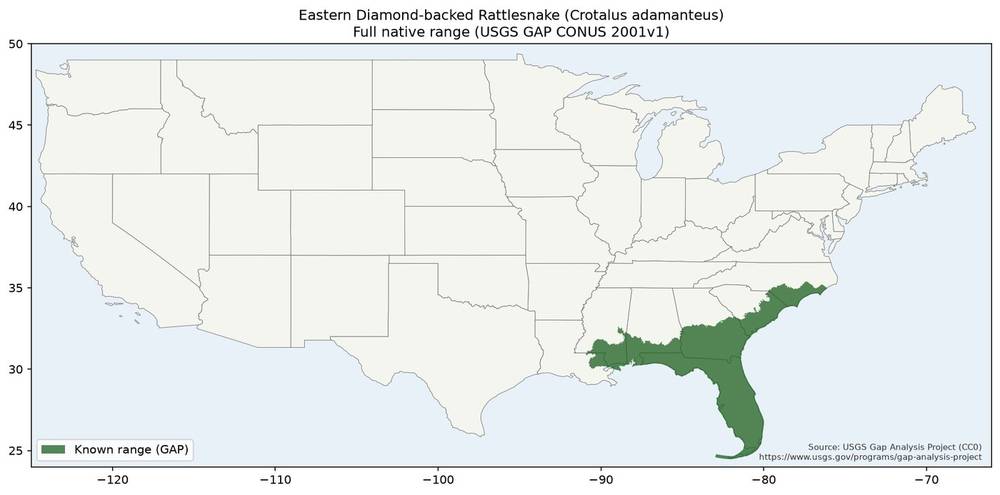
In Georgia, eastern diamondbacks occur south of the Fall Line in the Coastal Plain. U.S. range: southeastern North Carolina to extreme eastern Louisiana. Brochure status: rare, Georgia Species of Concern, with declines from habitat loss and persecution. Range margins estimated; treat coastal and inland edges carefully.
Full species range map
Habitat preferences
Open longleaf pine woods are preferred; also pine-hardwood forests burned regularly with open canopy; coastal marshes, sand dunes, and grassy shrub islands; mixed pine-hardwood on abandoned agricultural sites; brushy pasture borders and abandoned homesites. Commonly associated with gopher tortoise burrows (also stump holes and other underground chambers). DNR notes they almost never enter houses.
Natural history
Considered diurnal, though “active” often means waiting in a suitable spot. Poikilothermic; dormant in underground shelters over late fall and winter, emerging briefly on warm days. Courtship and mating in late summer and early fall; females store sperm over winter; about a dozen live young born late August–September. Wild longevity approaches 20 years; longer in captivity. Males may have home ranges over several hundred acres; females around 200 acres. Young may be preyed on by kingsnakes, indigo snakes, large raptors or wading birds, hogs, and bobcats; adults face mainly human persecution.
Food preferences
Warm-blooded prey almost exclusively: mice, rats, chipmunks, squirrels; large adults can take cottontail rabbits.
Temperament and encounters
Often lethargic ambush hunters. Myths of 10-foot roadside monsters and aging snakes by rattle segment count are false (a new segment appears with each shed; long strings break). DNR groups diamondbacks with timber rattlesnakes and cottonmouths among species that realistically can seriously threaten human life if a bite occurs — still a remote risk versus many environmental hazards. Do not approach or attempt to kill.
Conservation and legal notes
Large declines from agriculture, silviculture, urbanization, and on-sight killing. Gassing gopher tortoise burrows to collect or kill rattlesnakes for “roundups” is illegal and harms tortoise-burrow communities (up to hundreds of other species). O.C.G.A. §27-1-28 protects many nongame animals including non-venomous snakes; O.C.G.A. §27-1-30 forbids destroying dens or using chemicals/explosives/devices to drive wildlife — including venomous snakes — from homes.
If you meet one
Freeze, locate the snake, and back away slowly. Do not try to move it yourself. Qualified removal only if it is truly in conflict with people or pets. Education partners around Cartersville, including Etowah Valley Exotics when appropriate, can help with identification and outreach.
Bite care: stay calm; 911 or Georgia Poison Center 1-800-222-1222; hospital promptly; sight-only ID; do not kill the snake; keep patient calm with limb level; no food/drink/meds; no tourniquet, cutting, sucking, or ice.